
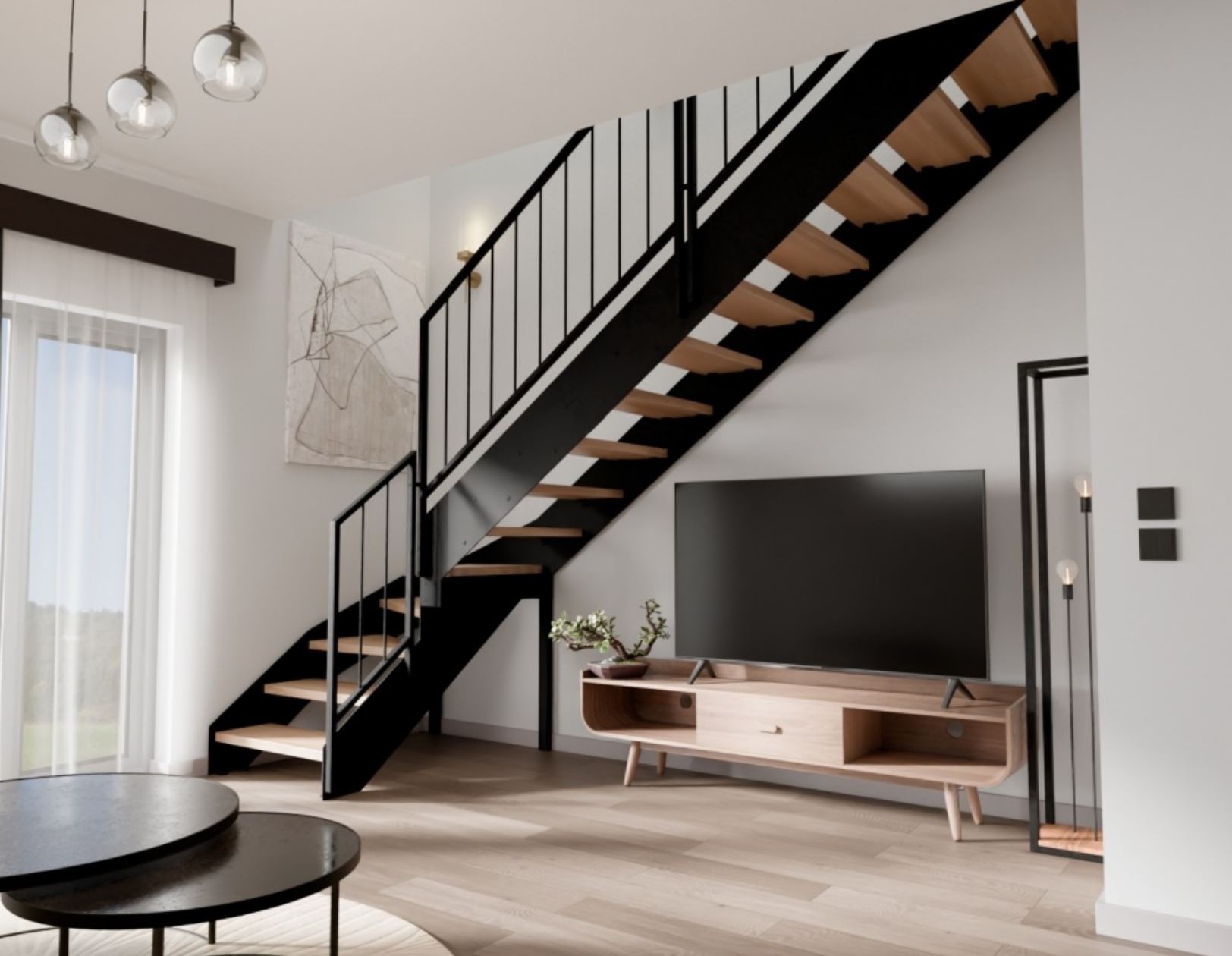
Ordering an indoor staircase has a direct impact on the comfort, safety, aesthetics and long-term maintenance of your home. With proper planning, you can achieve an indoor staircase that is beautiful, practical, safe and durable. Here are the key points to check before signing an order.
Identify beams, sloping ceilings, technical ducts and other obstacles above the staircase path. Overlooking these constraints can often lead to modifications during installation.
Prepare a plan showing walls, doors, windows, fireplaces and technical services. This helps ensure that a custom-made indoor staircase is integrated correctly without costly errors.
Wood such as oak, ash or beech remains a classic choice. It requires an appropriate finish, such as varnish or oil, as well as regular maintenance.
Steel structures combined with glass elements create a contemporary or loft-style appearance. They require precise installation and can involve a higher budget.
A combination of wood, steel and glass is another popular solution, offering both durability and a refined aesthetic.
Wooden steps, steel structures and glass balustrades can be combined in numerous ways. Finishes such as varnishing, oiling, brushing and powder coating influence both appearance and durability.
Always check exactly what is included in the quotation: materials, finishes, transport and installation.
For comfortable everyday use, a riser of approximately 17–19 cm and a tread depth of at least 25 cm are commonly considered. Incorrect dimensions can reduce comfort and increase the risk of accidents.
The balustrade should be stable and comply with applicable safety requirements. A handrail at approximately 90–100 cm combined with suitable staircase lighting can significantly improve everyday safety.
Also ask about the warranty and after-sales service before placing the order.
An indoor staircase can become a genuine focal point of the interior. Decide whether it should stand out or blend discreetly into the space, and choose a design that complements the overall style: classic, modern, Scandinavian or loft.
Request detailed technical drawings and, ideally, a 3D visualisation. This allows you to verify the proportions, colours and design details before production begins.
Coordinate the wood species and colour with the flooring and doors, or create a carefully controlled contrast using steel and glass.
Ask for clear timelines covering design, manufacturing, delivery and installation. A custom-made indoor staircase may require several weeks or months for production, while installation itself can often take only a few days.
Confirm whether delivery to the construction site is included and how any adjustments required during installation will be handled.
The contract should clearly specify:
Without a proper contract or invoice, warranty protection may be limited or difficult to enforce.
The quotation should clearly identify the cost of:
The cheapest option is not necessarily the most economical in the long term. Investing in quality materials and professional installation can provide greater durability, comfort and safety.
Ask for an itemised quotation covering design, materials, balustrades, finishes and installation.
Check the warranty period and exactly what it covers, including the structure, materials and installation. Also ask about the procedure for reporting a potential issue.
Choose a manufacturer that offers reliable after-sales service and can provide replacement components when necessary.