Indoor Metal Staircases: Advantages and Disadvantages (All-Metal vs. Hybrid)
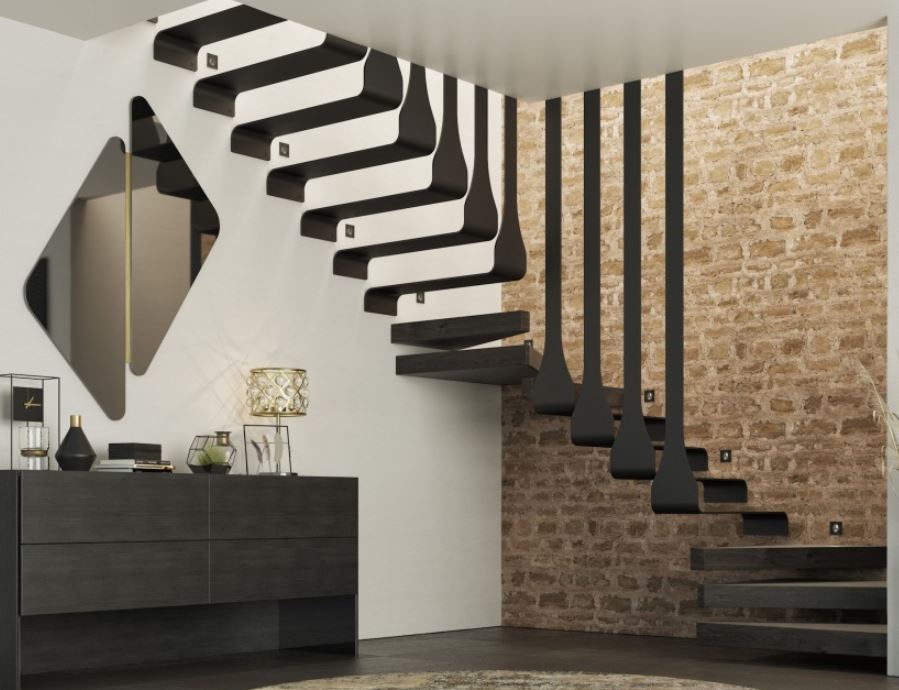
Les escaliers métalliques sont a popular choice for modern interiors, lofts and industrial-style spaces. Steel offers high strength, a visually lightweight appearance and extensive design freedom — from minimalist “floating” steps to sculptural laser-cut designs. However, a metal staircase can be noisier, feel colder underfoot and requires professional corrosion protection.
Below is a practical comparison of two common configurations, with examples such as Volare Ferro, Luxor, Prestigio, Revo, Novara and Spilo Bis.
Option 1: All-Metal Indoor Staircase (Structure + Metal Steps)
In this configuration, the load-bearing elements — stringers, beams and brackets — as well as the steps are made of metal, most commonly steel protected with powder coating, galvanisation or other corrosion-protection systems. The aim is to create a coherent “metal throughout” staircase.
Example Models
- Volare Ferro – wall-mounted steps with a “floating” or suspended effect
- Prestigio – modern, curved steel steps with laser-cut detailing
- Luxor – steel “carpet-style” staircase with steel-profile balustrades
Advantages of All-Metal Staircases
- Maximum strength and long service life
Properly protected steel withstands intensive everyday use and maintains its structural rigidity for many years.
- Clean industrial and contemporary look
An all-metal finish works particularly well in loft, minimalist and modern interiors.
- Open forms and unique geometries
Laser cutting and perforation allow for visually lightweight designs and bold custom-made shapes.
- Fewer issues associated with combining different materials
There is no wood shrinkage or difference in expansion between multiple materials.
- Ideal for floating staircase concepts
Systems such as Volare Ferro can create a strong “steps floating in the air” effect.
- Easy to coordinate with metal balustrades
Stainless steel, powder-coated steel or laser-cut panels can create a consistent overall aesthetic.
Disadvantages of All-Metal Staircases
- Higher cost for manufacturing and corrosion protection
Surface preparation, welding finishes and protective coatings must be carried out to a high professional standard.
- More noise and resonance
Metal steps can amplify footsteps, so acoustic-damping solutions may be required.
- Lower thermal comfort
Metal can feel cold underfoot, particularly in interiors that are not consistently heated.
- Less visual warmth
An all-steel staircase can feel somewhat austere if the interior would benefit from warmer materials.
- More demanding transport and installation
Some components can be heavy and require precise assembly to avoid movement, gaps or alignment issues.
- Non-standard designs can become expensive
Complex geometries increase manufacturing time and can significantly affect the overall budget.
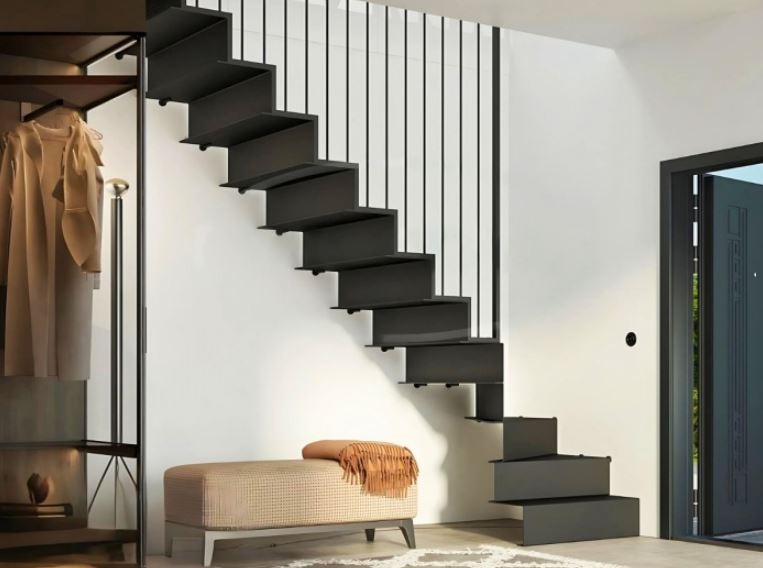
Option 2: Metal Structure + Wooden, Glass or Concrete Steps (Hybrid Staircase)
In this configuration, the staircase structure is made of metal, while the steps are manufactured from another material — most commonly wood. This approach combines the strength of a steel structure with the comfort and decorative possibilities of alternative finishes.
Example Models
- Revo – steel structure with wooden steps
- Novara – wooden steps, available in 4 cm or 6 cm thickness, flush with the steel structure
- Spilo Bis – helical staircase with a metal structure and several step-finish options
Advantages of Hybrid Staircases
- Greater comfort and a warmer appearance
Wood is pleasant underfoot and visually softens the metal structure.
- Greater design flexibility
The appearance can be updated in the future by changing the finish of the steps without replacing the entire structural frame.
- Easier repairs
A damaged wooden step is generally easier and less expensive to replace than a metal step.
- Improved acoustics
Wood reduces the “metallic” sound of footsteps and can help minimise resonance.
- Attractive aesthetic contrast
Steel combined with wood is a timeless choice, offering a modern yet welcoming appearance.
Disadvantages of Hybrid Staircases
- Material movement due to humidity and temperature
Wood can shrink or expand, so the fixings must allow for appropriate tolerances and movement.
- Less of a “100% industrial” character
If you are looking for a strictly all-metal loft aesthetic, wood may appear too soft.
- Greater wear on the steps compared with steel
Wood is more sensitive to scratches, moisture and abrasion.
- More demanding fixing systems
Poorly designed connections can lead to squeaking, vibrations or misalignment of the steps.
- Higher maintenance requirements
Oiling, varnishing and periodic refinishing may be required depending on the chosen finish.
Which Metal Staircase Should You Choose for Your Interior?
Choose an all-metal staircase if you prioritise:
- maximum durability and structural rigidity
- a consistent industrial or modern style
- open, floating or highly minimalist designs
Choose a hybrid staircase (metal structure + wood or another material) if you prioritise:
- everyday comfort and a warmer atmosphere
- quieter use
- the possibility of changing or renewing the step finish in the future
Practical Advice Before Buying
- Check that the steel sections, profiles and beams have an adequate structural load capacity to minimise deflection and vibrations.
- Request clear information about corrosion protection, including powder coating, galvanisation, coating thickness and the quality of the welding.
- For all-metal steps, consider acoustic damping solutions, such as rubber pads or insulating layers, to reduce resonance.
- For hybrid staircases, ensure that the step fixing system is designed to accommodate natural wood movement and prevent squeaking over time.
- Request technical drawings, installation instructions, warranty conditions and examples of completed projects before selecting a model.